You’ve probably noticed something about the most successful leaders you know: they don’t just wing it. They have frameworks—systematic ways of thinking that help them cut through complexity and make consistently good decisions under pressure.
Warren Buffett doesn’t evaluate every investment from scratch; he applies his value investing framework. Amazon doesn’t approach every business decision randomly; it uses its customer obsession framework. These aren’t rigid rules—they’re mental scaffolding that transforms chaos into clarity.
Architecture of Great Decision-Making
In business, frameworks function like the steel structure of a skyscraper: they don’t just hold up ideas—they help you build upon them intentionally. Without a framework, even the best insights remain isolated, like having all the right materials for a house but no blueprint to show you how they fit together.
Charlie Munger, Warren Buffett’s legendary business partner, understood this completely. He advocated for what he called a “latticework of mental models”—a structured way to organize new ideas so they could be retained, analyzed, and connected to drive better decisions. Munger knew that smart people without frameworks make predictably poor choices, while average people with good frameworks consistently outperform.
The Technology Framework Gap
Here’s what struck me after four decades in technology: every other business domain had these frameworks except technology.
- Finance has GAAP and ROI analysis
- Marketing has customer acquisition costs and lifetime value models
- Operations have lean principles and efficiency metrics
- Technology? It remained a chaotic collection of random tips, tools, and tactics with no unifying structure for business leaders to hang their decisions on
That’s exactly what the TIC wants—leaders operating without frameworks, making decisions based on vendor presentations and technical jargon they can’t evaluate. Your confusion is their competitive advantage.
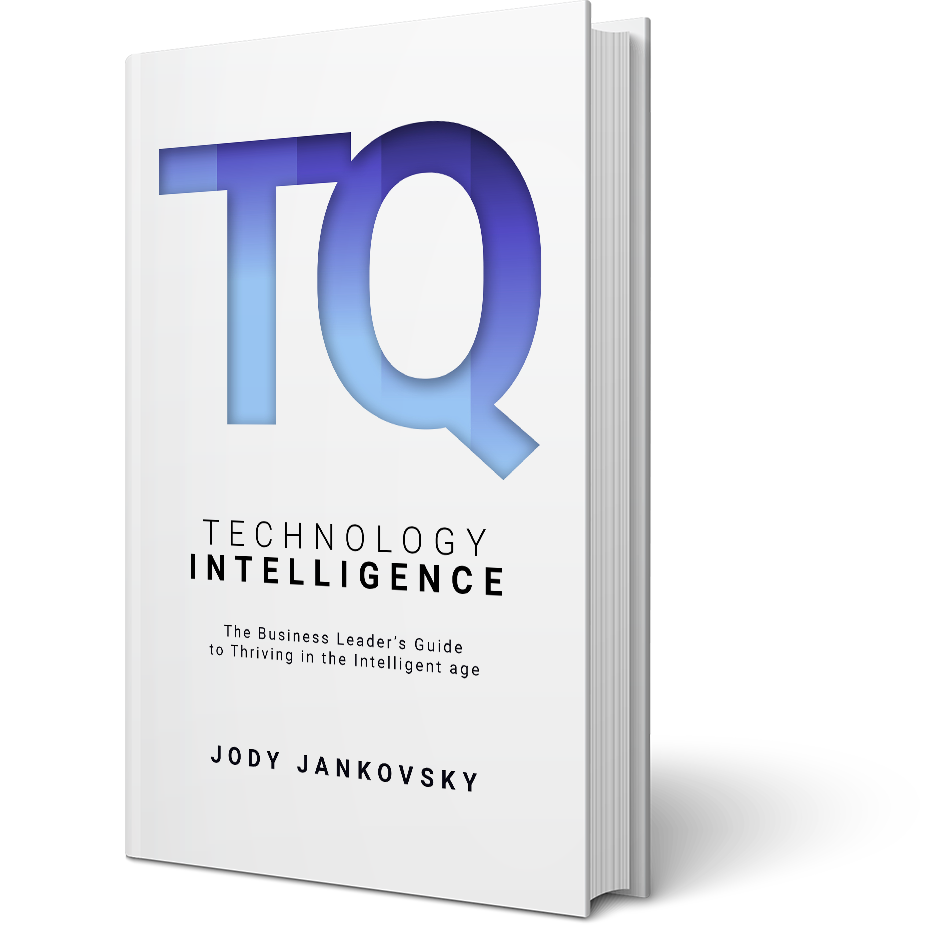
Technology Intelligence is the framework that changes this game entirely.
TQ in the Tradition of Great Business Frameworks
TQ gives you the same systematic advantage in technology that other frameworks provide in their domains. Just as you wouldn’t make financial decisions without understanding profit and loss, TQ ensures you never make technology decisions without understanding business impact and strategic alignment.
This isn’t a new concept—it’s just overdue in technology. Consider the frameworks that have transformed business leadership:
Proven Framework Legacy
Daniel Goleman gave us Emotional Intelligence (EQ)—a framework to understand and manage emotions in leadership
Stephen Covey provided the 7 Habits—a framework for personal effectiveness and character-based leadership
Jim Collins introduced the Hedgehog Concept and Flywheel Effect—frameworks for business focus and sustainable momentum
Michael Porter’s Five Forces gave executives a systematic way to analyze competitive environments and industry dynamics
Agile transformed software development by providing a framework for adaptive, iterative progress
OKRs (Objectives and Key Results) became the framework that revolutionized Google’s goal-setting and organizational alignment
Why These Frameworks
These frameworks endure not because they’re trendy—but because they make the abstract actionable. They take complex, overwhelming domains and give leaders practical tools for consistent success.
TQ belongs in this tradition. It’s the missing framework that transforms digital confusion into competitive clarity, helping business leaders move from technology overwhelm to strategic action.
The TQ Transformation
Think about your most frustrating technology experiences—the vendor conversations that left you feeling outmaneuvered, the projects that spiraled beyond recognition, the sense that everyone else spoke a language you couldn’t understand. Every one of those situations changes when you have TQ.
Before TQ: Technology Chaos
- Feeling lost in technical jargon without a business context
- Accepting vendor recommendations, you can’t properly evaluate
- Delegating critical technology decisions because they feel too complex
- Operating from weakness in every technology conversation
After TQ: Strategic Technology Leadership
- Recognizing the business patterns underneath technical complexity
- Having systematic tools to assess vendor recommendations strategically
- Leading technology decisions with the same confidence you bring to finance and operations
- Negotiating from strength based on frameworks rather than hope
The Power of the Right Framework
This is the power of having the right framework. TQ doesn’t make you a technologist any more than understanding financial statements makes you an accountant. But it gives you the systematic intelligence to lead technology decisions with the same confidence you bring to every other aspect of your business.
Just as Munger’s “latticework of mental models” creates compound advantages in investment decisions, Technology Intelligence creates compound advantages in digital strategy. You stop making isolated technology choices and start building systematic competitive advantages that strengthen with each decision.
From Chaos to Competitive Advantage
The blueprint metaphor isn’t just a nice analogy—it’s the key to understanding how technology really works in modern organizations. Just as architectural blueprints transform construction from guesswork into systematic building, TQ transforms technology from a source of confusion into a driver of competitive advantage.
In a world where technology drives every aspect of business success, having a systematic framework for technology leadership isn’t just helpful—it’s essential for survival and growth in the Intelligent Age.
Ready to Build Your Technology Intelligence?
Understanding why frameworks matter is the first step. Now it’s time to build your systematic approach to technology leadership that transforms confusion into competitive advantage.
Explore the Technology Intelligence Framework →
Learn About TQ Components →
See TQ in Action →
Technology Intelligence represents the culmination of 45 years of developing systematic approaches to bridge the gap between business leadership and technology strategy.